Applications / Agent Delegation
Who is acting, on whose behalf, and under what authority?
When an agent acts for someone, two questions can easily become one.
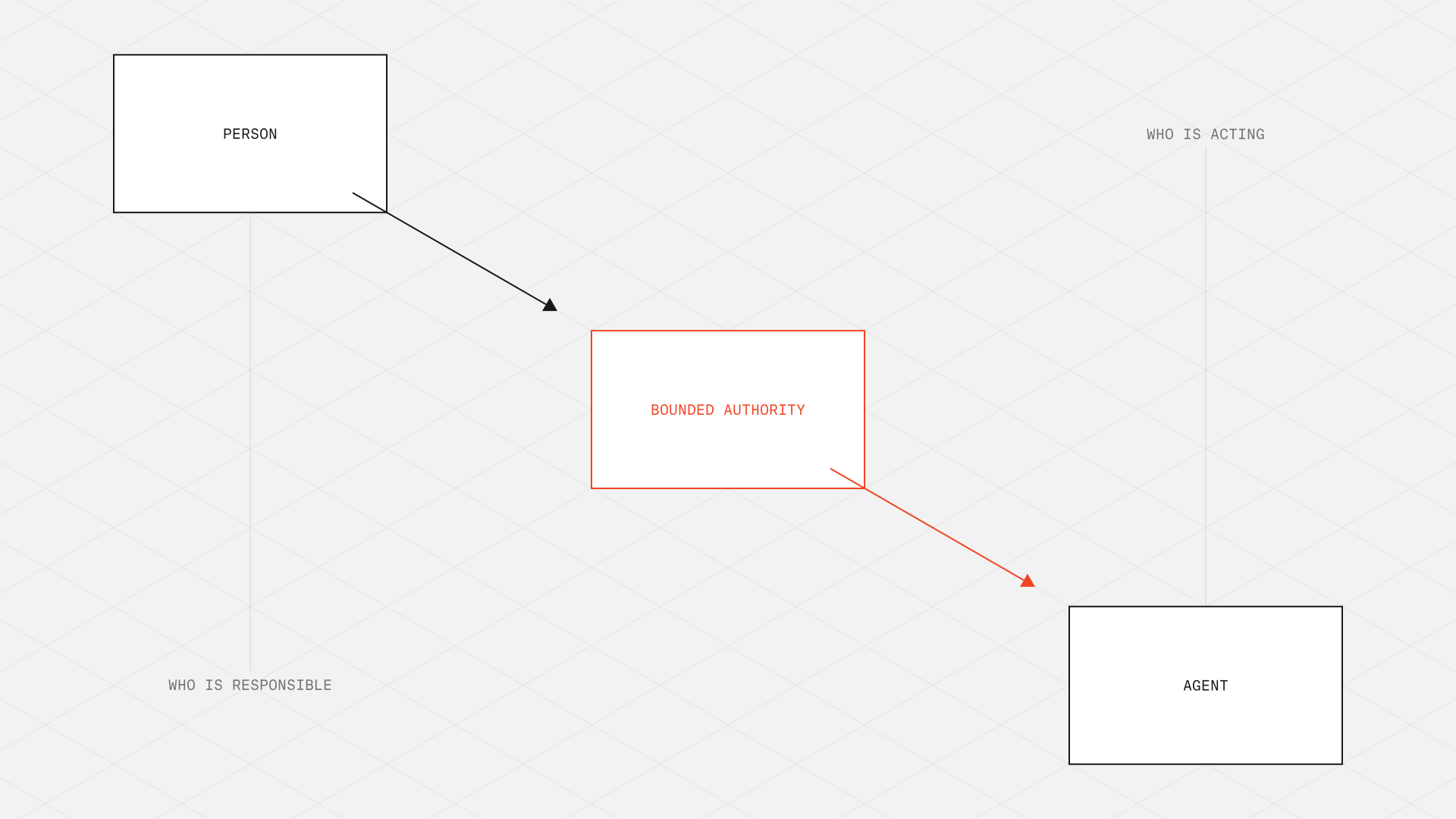
Who is responsible for what the agent does? And what is the agent authorized to do? They are related, but they are not the same question.
A person can remain accountable for an agent while the authority available to that agent is separately bounded.
An agent does not need to become the person whose authority it acts under.
The agent can receive bounded authority.
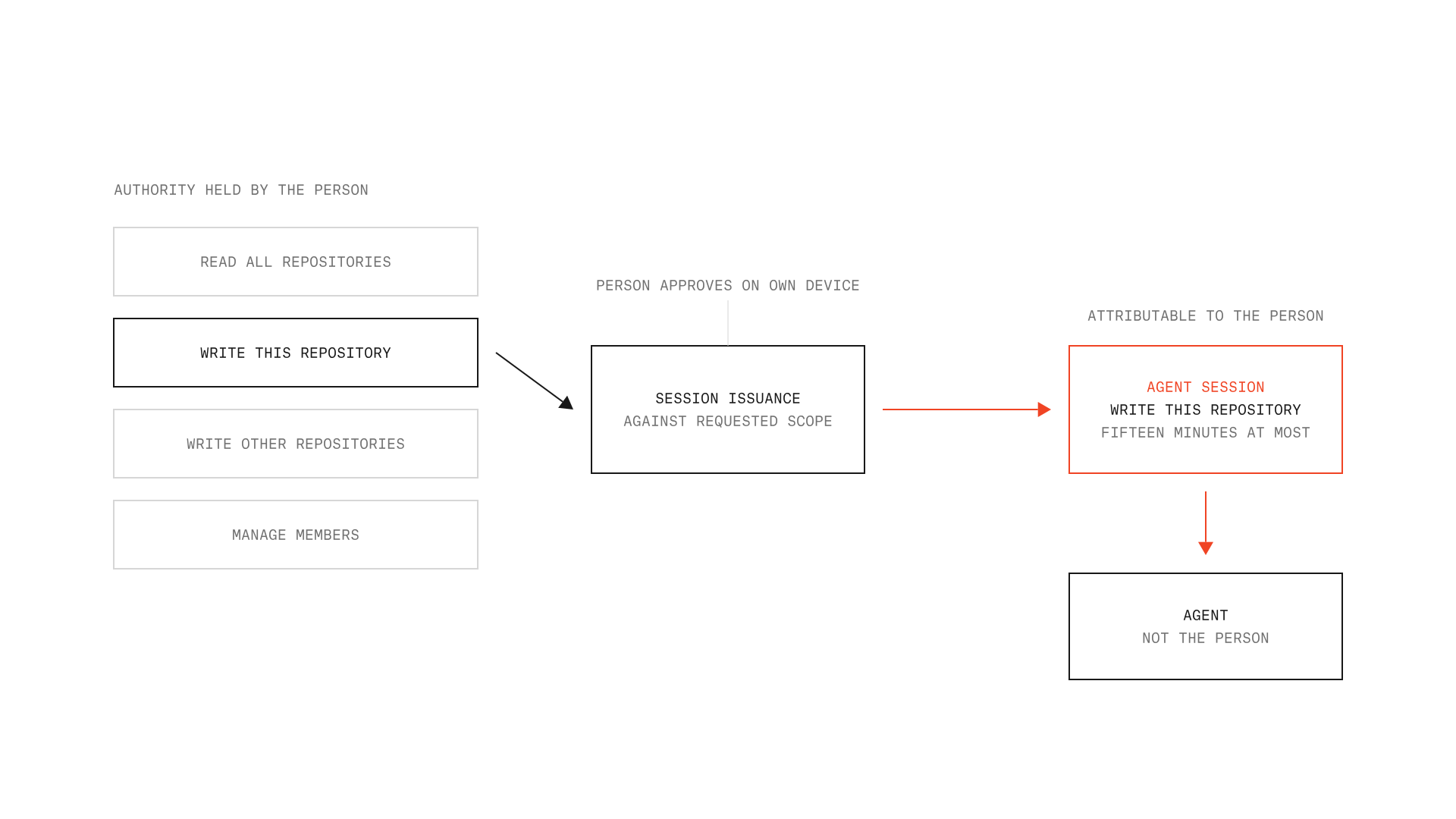
Suppose an agent needs to write to a specific repository on someone's behalf.
The person may already hold authority relevant to that action. The agent does not need everything associated with that person because it acts for them.
The immediate decision can be narrower:
The decision
May this agent receive a session carrying authority to perform this action on this repository?
In the tested implementation, the agent holds its own software key. The person approves each new session from their own device, presenting the requested grants and an accountable reference. Each session lasts no more than 15 minutes.
In that implementation, Krutho evaluates the authority the person already holds against the action and scope the agent has requested.
The resulting session remains attributable to the person while carrying only the selected authority requested for the agent.
The agent does not become the person, and it cannot create authority the person did not already hold.
Accountability can remain with the person while authority is bounded to the agent.
The person can remain the same while their authority changes.
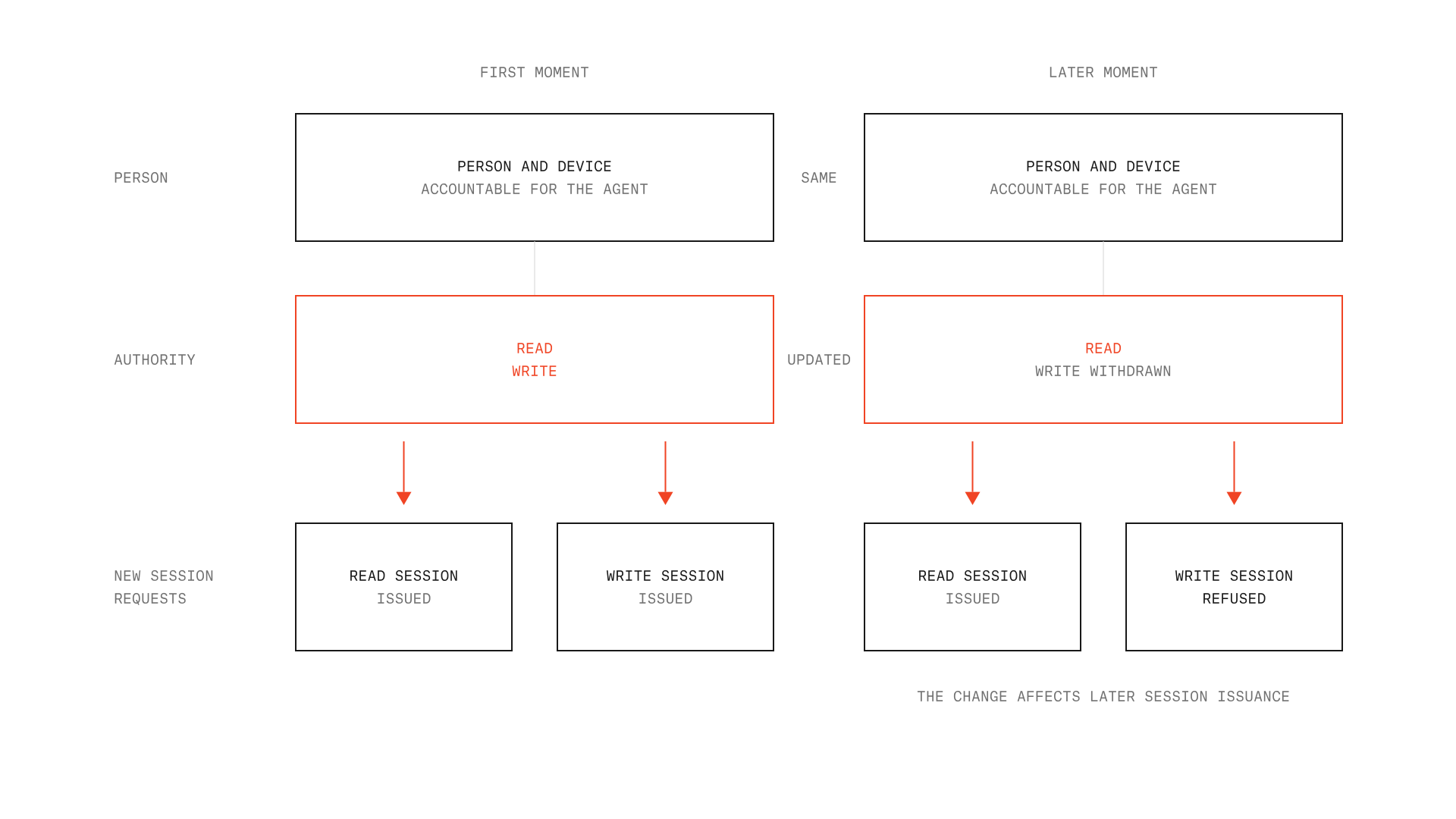
Identity and authority do not necessarily share the same lifecycle.
In Krutho's implementation, withdrawing a grant does not require removing the person's identity, device or registered keys.
The person remains. Their authority changes.
A later request for a new session carrying the withdrawn grant is refused, while authority they still hold can remain available for a new session.
Changing what someone is authorized to do does not require changing who they are.
Different decisions can need different things.
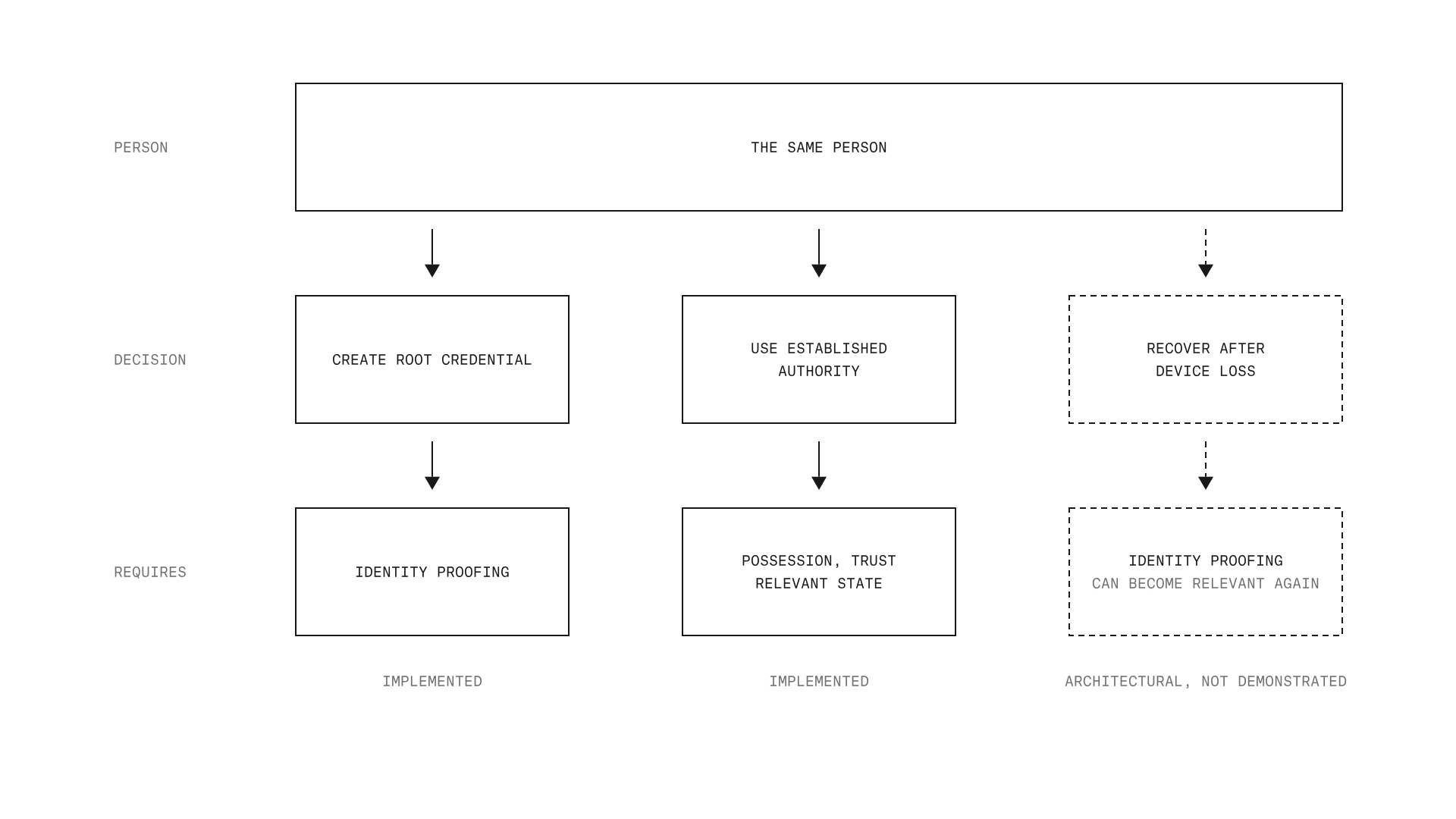
Separating identity and authority does not mean identity becomes unnecessary.
A separate Krutho credential-authority implementation covers the first two decisions below. Recovery after device loss is architectural and not demonstrated.
Creating a root credential requires identity proofing.
Once authority has been established, using derived credentials can rely on possession, trust and relevant lifecycle state without repeating the original identity-proofing decision every time.
If authority needs to be recovered after device loss, identity proofing can become relevant again.
The person has not become less important between those moments.
The decisions require different things.
What a system needs to know should follow the decision being made.
Issuing the session is not the final decision.
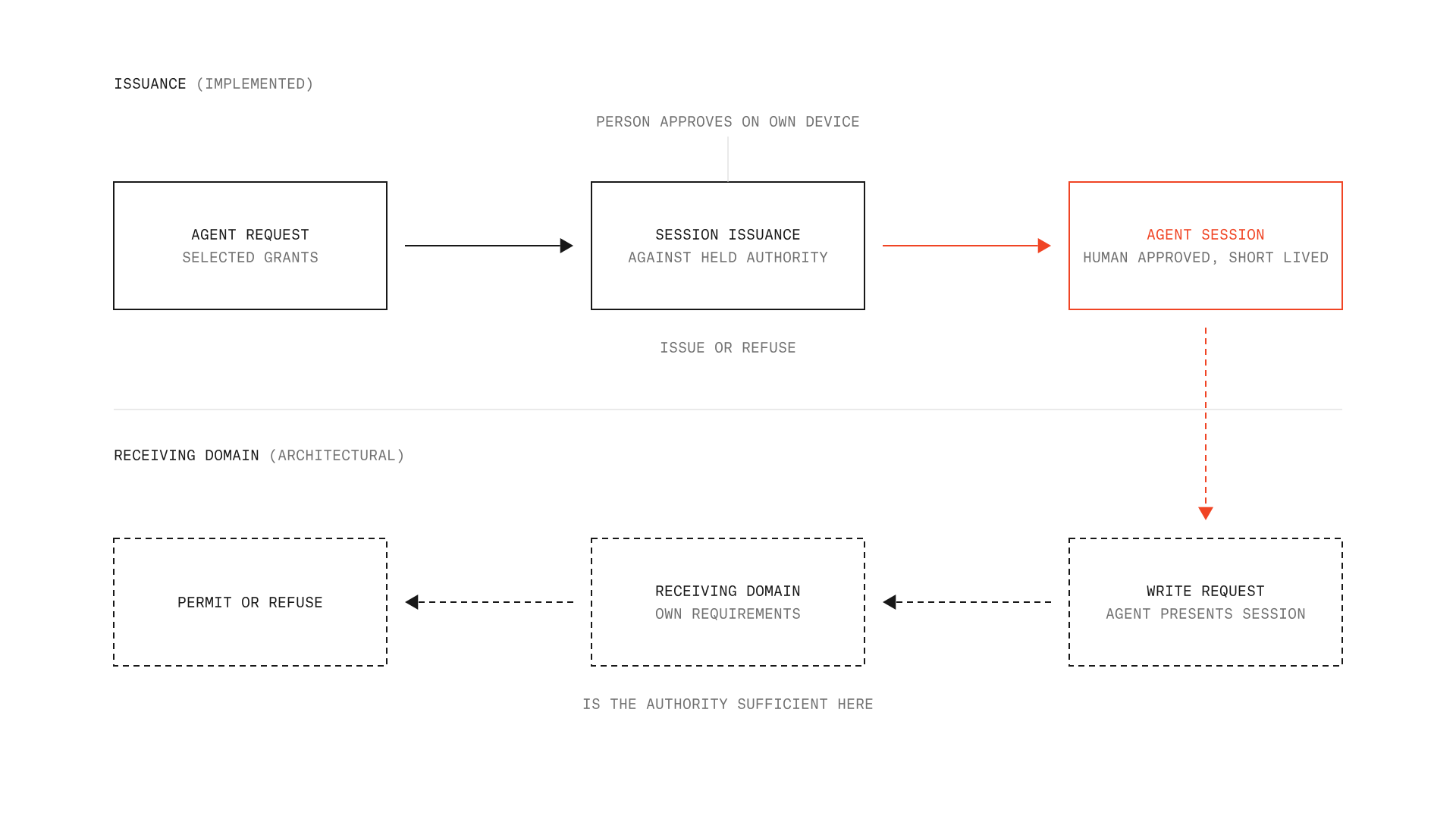
There are still two distinct decisions.
First:
Decision
May this agent receive a session carrying authority to write to this repository?
Then:
Decision
Is that authority sufficient to permit this write here?
Krutho has implemented the first decision.
The second belongs to the receiving domain.
That domain determines what it trusts, what authority it requires, what state must be available and what conditions apply to the requested action.
A session carrying valid authority does not create automatic permission.
The person remains accountable. The agent receives bounded authority. The receiving domain still decides.
Krutho can allow an agent to act through bounded delegated authority without requiring the agent to inherit the person's identity or everything the person is authorized to do.
The authority can remain specific to an action and scope.
Its validity can remain subject to lifecycle state and time.
And carrying that authority does not remove the receiving domain's responsibility for its own decision.
Evidence
What we have shown.
Krutho has implemented human-approved, short-lived agent-session issuance in which requested grants are limited to authority already signed into the responsible person's credential. The tested issuance path uses software keys. Each implemented session lasts no more than 15 minutes.
The implementation also shows that withdrawing a grant changes the authority available for a later session while the person's identity, device and key registrations remain.
The receiving-domain action evaluation described here remains an architectural consequence of that bounded delegation model rather than part of the exercised agent-session path.