
Why Krutho
Every operation, its own jurisdiction.
Authorization architecture often makes more of the organization participate in a decision than the decision itself requires.
That can be reasonable. Some decisions depend on live information, shared state or systems that must participate synchronously. But not every dependency exists because the decision requires it. Some exist because the architecture requires it.
Krutho works alongside the systems that already establish authority. They establish it once, and the system making each decision evaluates it.
Stay in control without participating in every decision.
Control does not require the systems that establish authority to participate synchronously whenever it is evaluated.
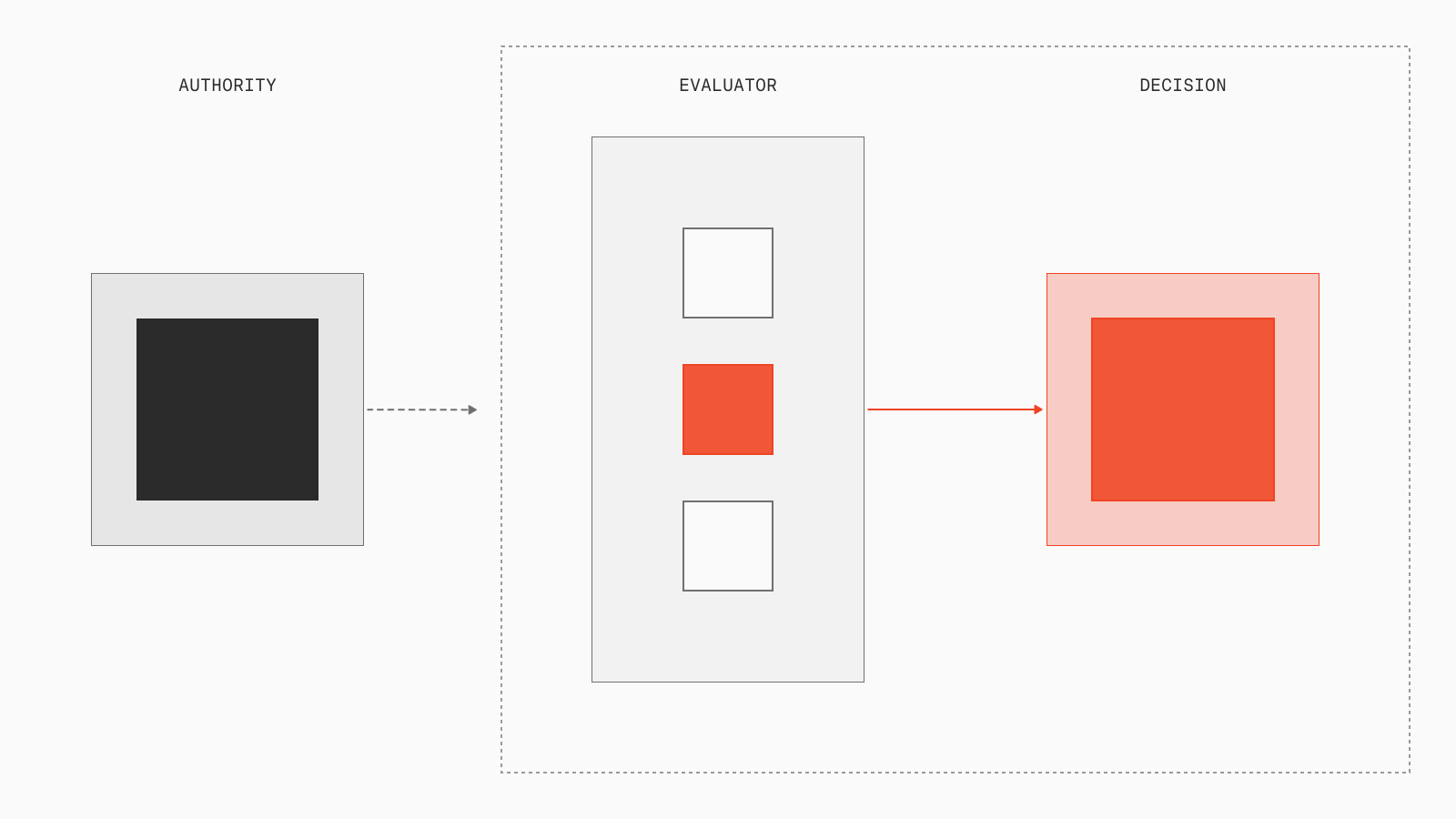
Scope, binding, expiry, trust, lifecycle state, freshness requirements and other conditions can continue to govern what is acceptable.
That does not make change instantly known everywhere. An evaluator can only act on the state available to it, and the deployment has to define how current that state must be for the decision being made.
Governed does not mean continuously supervised.
Let the relationship continue.
Crossing from one system into another does not have to mean reconstructing an established relationship.
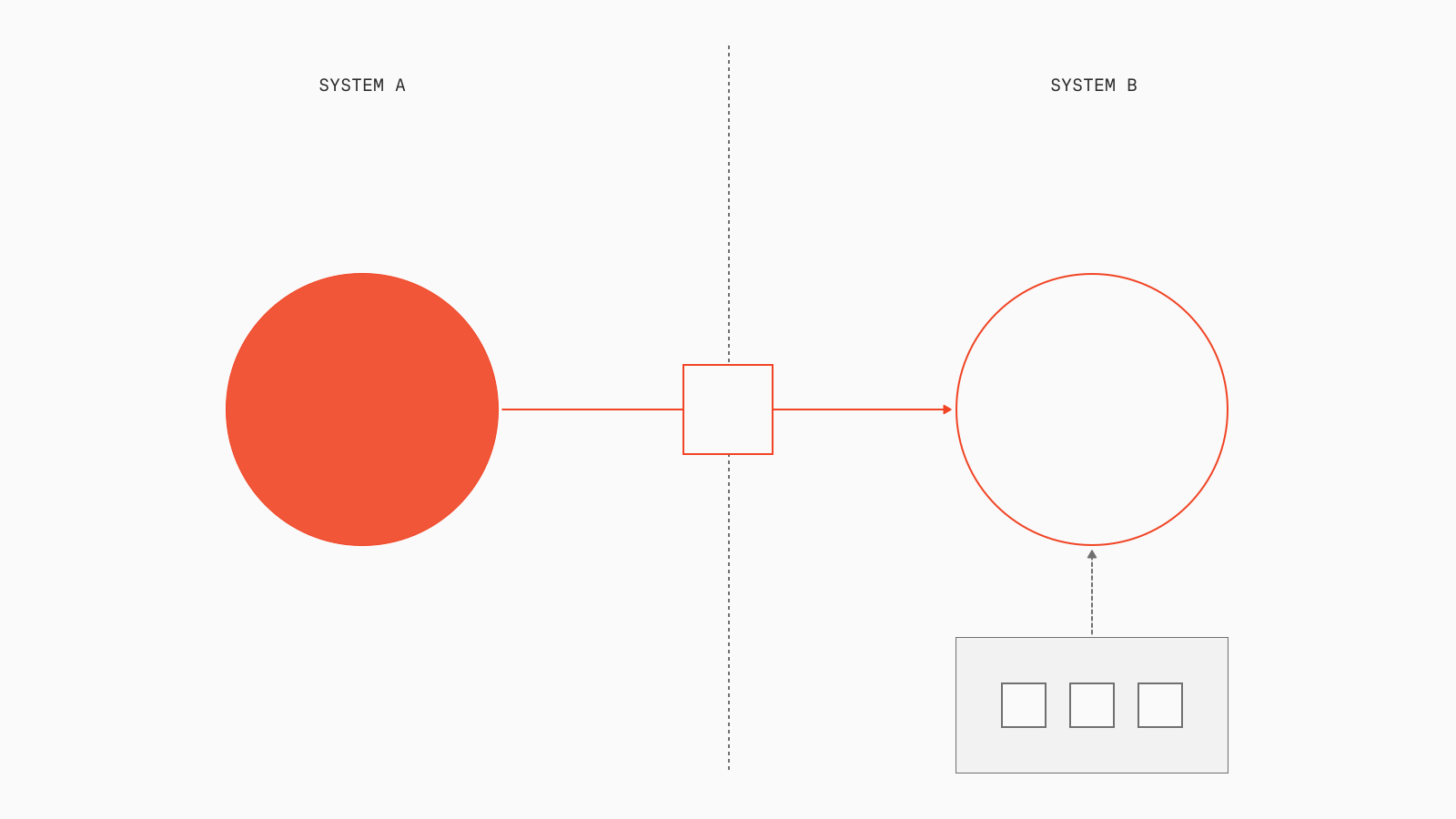
Relevant context can remain meaningful across the boundary while the receiving domain still decides what that context is sufficient for.
That can remove interactions that exist primarily because infrastructure changed rather than because the person, relationship or decision changed.
It does not mean that permission simply carries across the boundary. A new decision can still require renewed interaction or additional assurance when its requirements demand it.
The boundary remains. The relationship doesn't reset. Continuous relationship does not mean continuous permission.
Remove synchronous participation where the decision does not require it.
Systems often sit in an authorization path because they establish identity, authority, policy, trust or state.
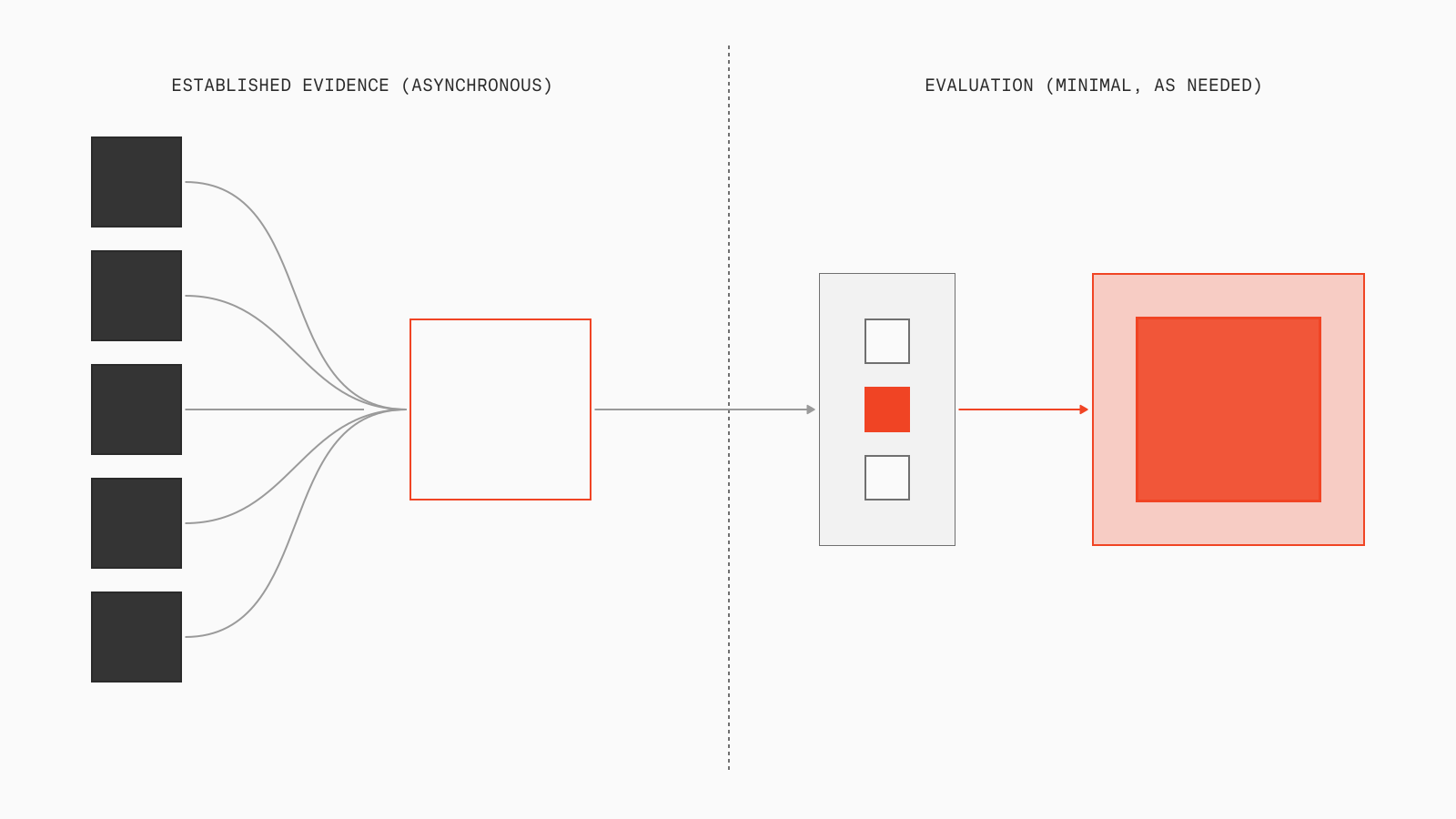
Those responsibilities can remain important without requiring the same systems to participate synchronously in every later decision.
Separating establishment from evaluation can change which systems must remain available, where latency enters the path, and what happens when connectivity or infrastructure changes.
But removing one dependency does not make the decision dependency-free. Some decisions legitimately require synchronization. Shared mutable state, consumable authority or sufficiently current information may make synchronous participation the responsible architecture.
The question is not how much can be decentralized. It is:
What actually needs to participate when this decision is made?
Let the operation keep acting as part of the organization.
An operation can be part of a wider organization while still being responsible for decisions that legitimately belong there.
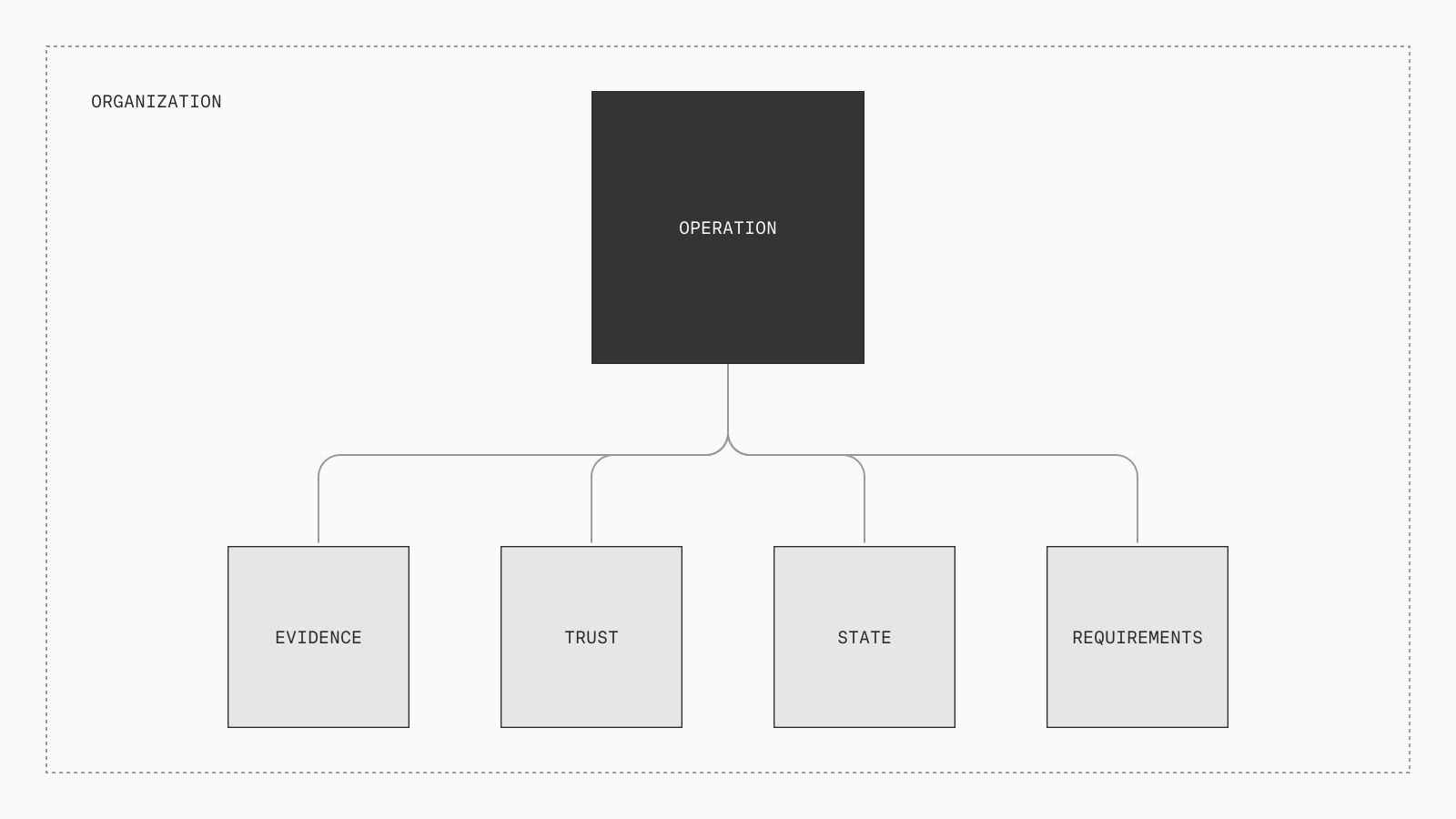
Those decisions do not need every system that established the relevant authority or facts to participate each time.
That can change what happens when connectivity is constrained, when upstream systems are unavailable, or when the latency and uncertainty of a remote dependency become operationally significant.
The operation does not become independent. It remains part of the organization and subject to the evidence, trust, state and requirements governing the decisions it makes.
Autonomy without independence.
Let something act for someone without becoming them.
Delegation does not have to collapse the distinction between the actor and the person or organization that remains accountable.
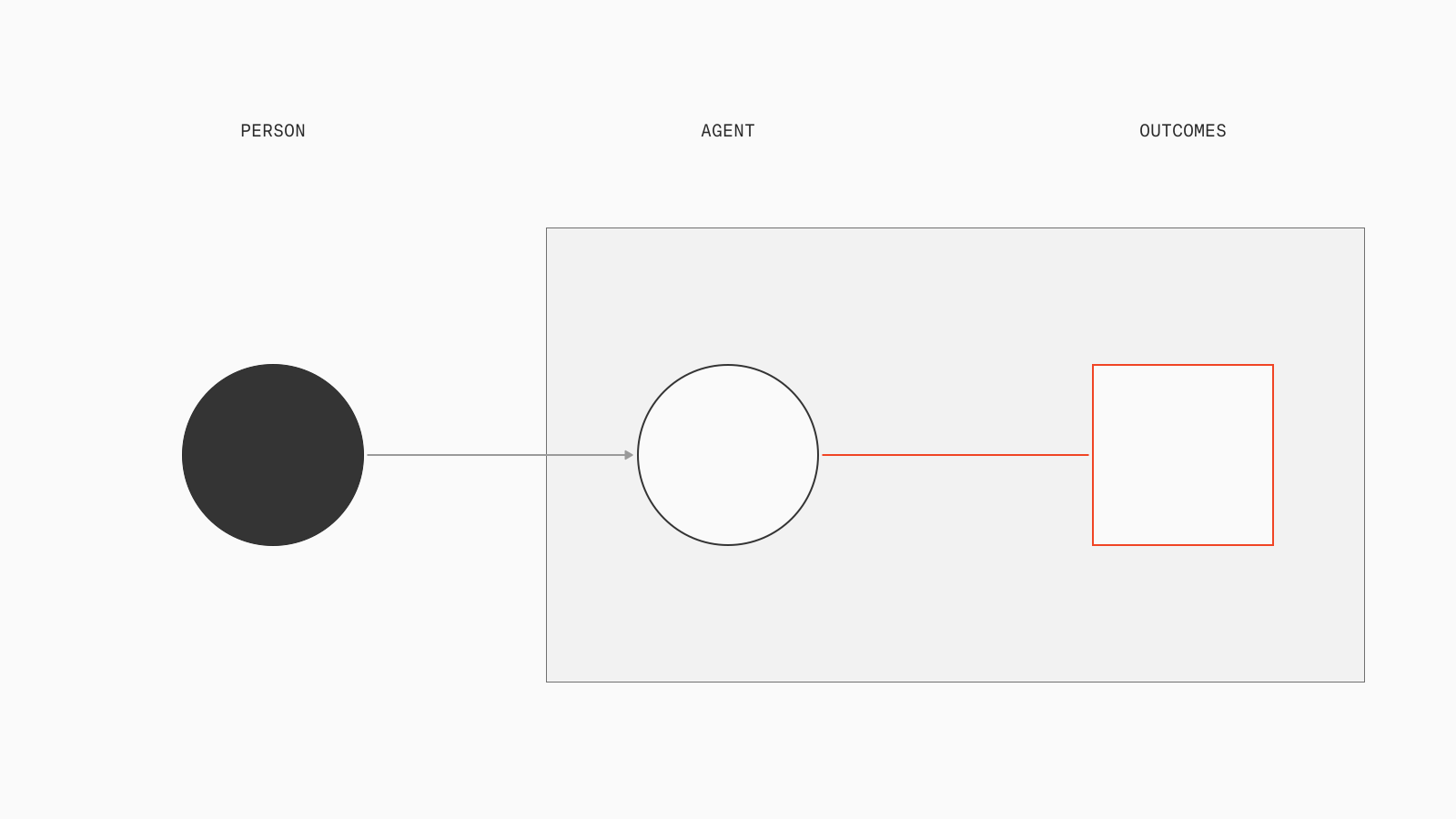
An agent can act under authority that is bounded to what it is permitted to do, while the accountable party remains distinct.
That delegation still has to justify itself. Its scope, duration, assurance, lifecycle and the decisions for which it is sufficient all matter.
The point is not to turn the agent into the person.
Acting for someone doesn't require becoming them.
Let another organization decide without making it depend on you every time.
One organization can establish relevant authority or facts while another remains responsible for its own decision.
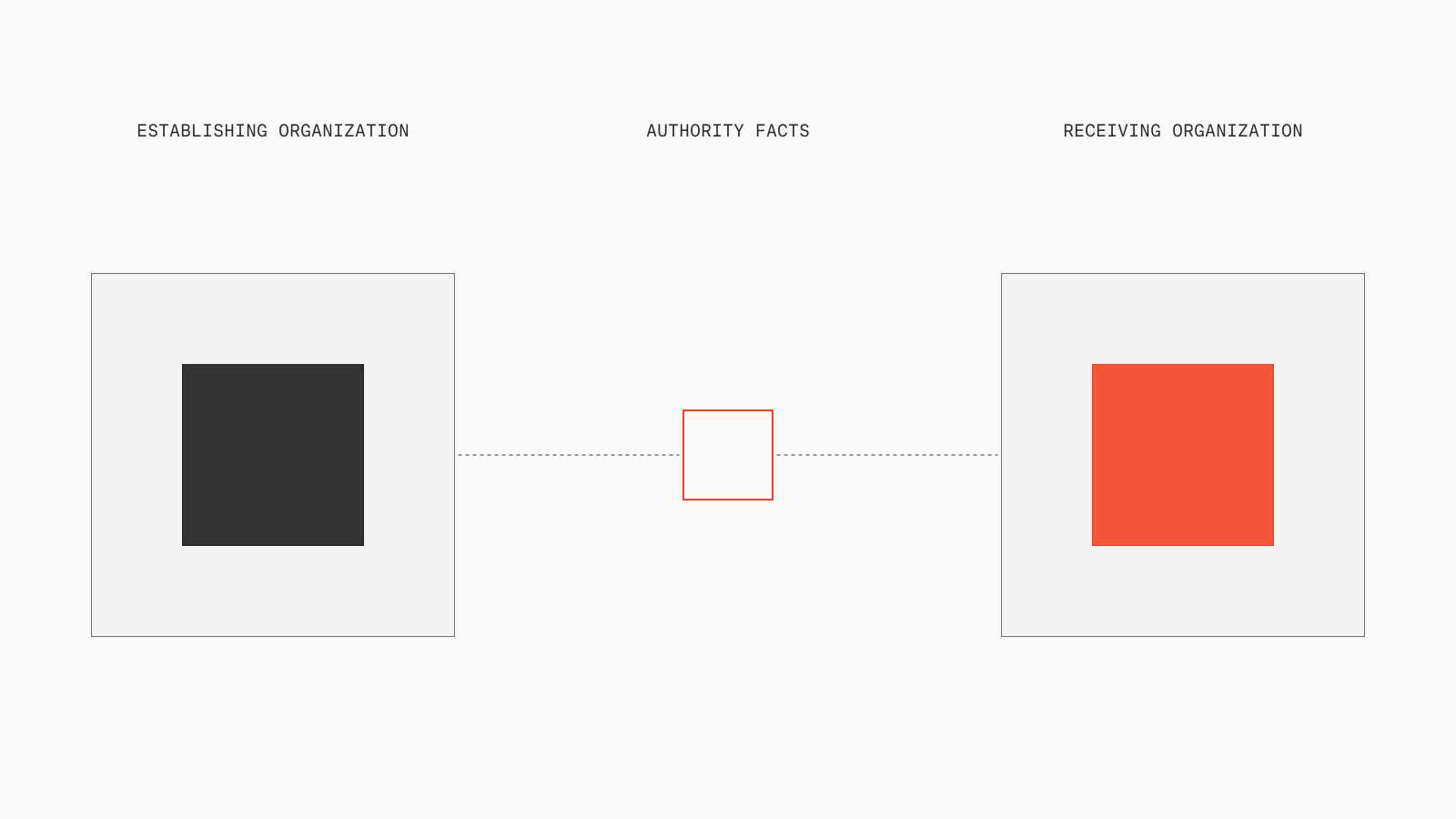
The receiving organization can evaluate what has been established against the trust, state and requirements governing the decision it owns.
That does not make the organizations independent of one another. Trust relationships, lifecycle responsibilities and contractual conditions remain.
What changes is whether the establishing organization has to participate synchronously in every relevant evaluation.
Authority can cross a boundary without decision responsibility crossing with it.
One architecture. Different consequences.
Krutho does not begin with a requirement to make authorization local, distributed or disconnected. It begins with the decision.
Who is responsible for it? What does it depend on? What must be known? Which systems genuinely need to participate when it is made?
Different answers expose different possibilities.
For one operation, that may mean greater continuity. For another, fewer synchronous dependencies. Elsewhere it may change an interaction, a partnership, a delegation model or the way control is maintained.
The architecture is the same.