How Krutho Works
Establishing what a decision relies on and making the decision do not always have to involve the same systems.
Authorization commonly brings several things together.
One system establishes identity or relevant facts, and the authority that follows. It produces evidence. Other systems verify the evidence, evaluate it for a particular decision, make that decision and enforce the result.
Those responsibilities can overlap. They do not have to be the same responsibility.
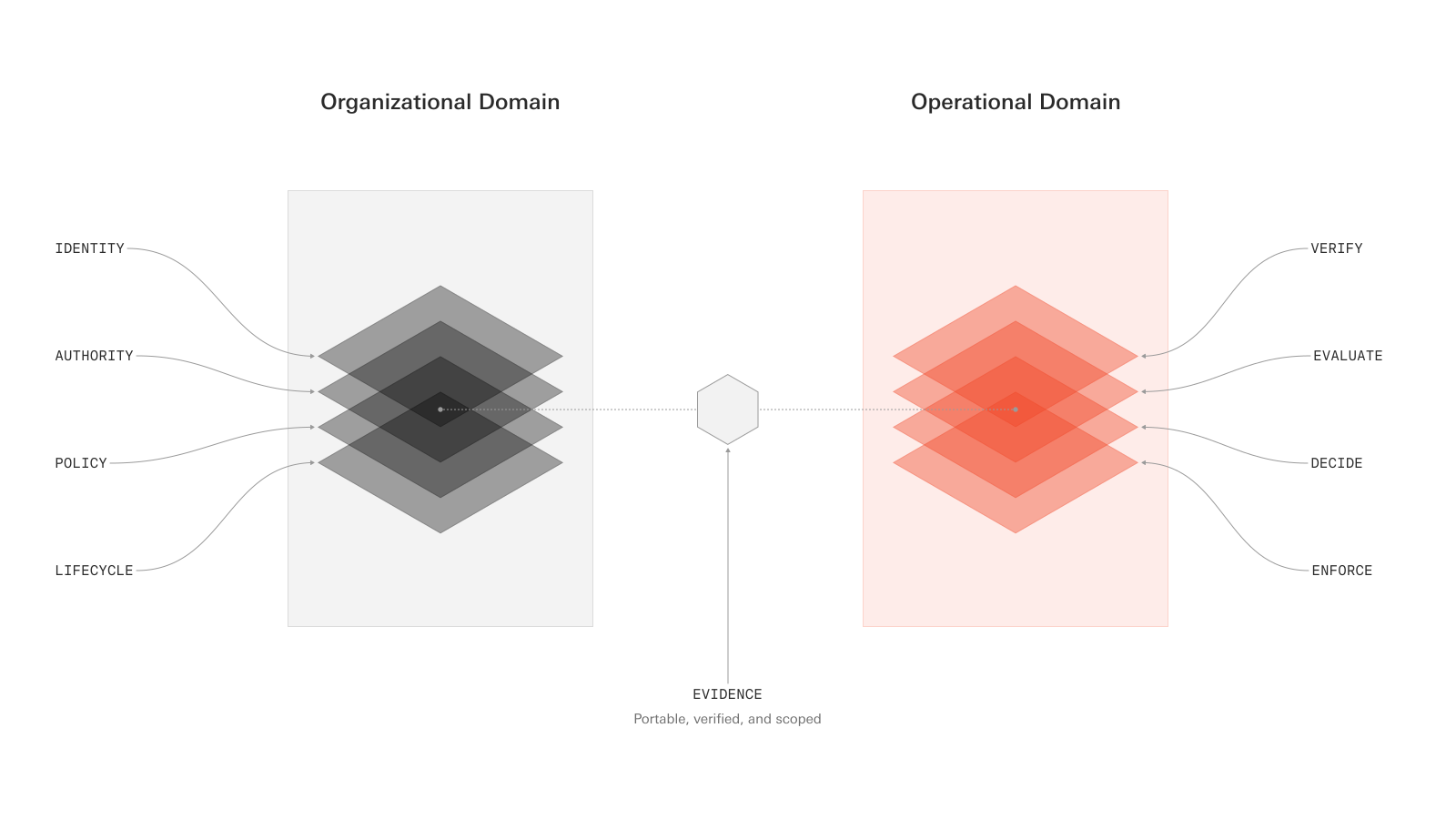
Krutho lets the receiving system evaluate established authority where it makes the decision, without requiring the systems that established that authority to participate synchronously in every evaluation.
Authority remains governed. Decisions happen where they belong.
A decision belongs where responsibility for it belongs.
A decision belongs with the domain that legitimately has responsibility for making and executing it.
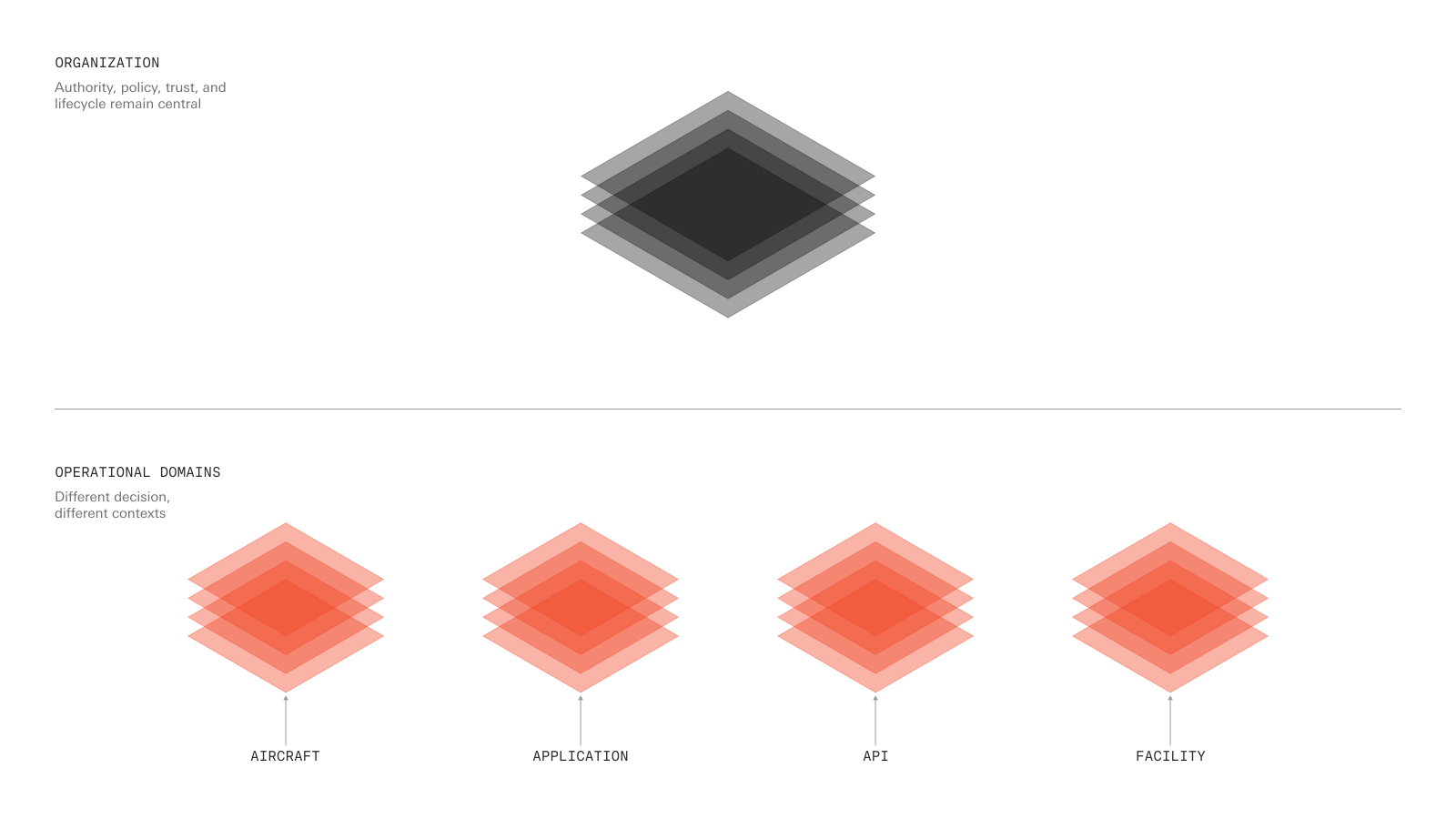
An aircraft network, application, API or other operational domain can make decisions that legitimately belong there without becoming independent of the organization or gaining authority it should not have.
The conditions governing the decision may still come from elsewhere. Trust may be established elsewhere. Relevant authority or facts may be established elsewhere. Lifecycle state may come from elsewhere.
Decision responsibility does not mean ownership of everything the decision relies on.
Identity, evidence, authority and decision are different things.
Identity
Identity establishes accountability.
Evidence
Evidence establishes what can be known.
Authority
Authority establishes a legitimate basis for action.
Decision
The receiving domain evaluates that basis and makes the decision.
Evidence can directly express established authority, or it can express relevant facts from which a receiving domain accepts authority under its own requirements.
That distinction matters because presenting valid evidence does not force a particular decision. The receiving domain still has to determine what the evidence is sufficient for.
Establishment and evaluation can be separated.
Authority or relevant facts can be established before a later decision needs to be made.
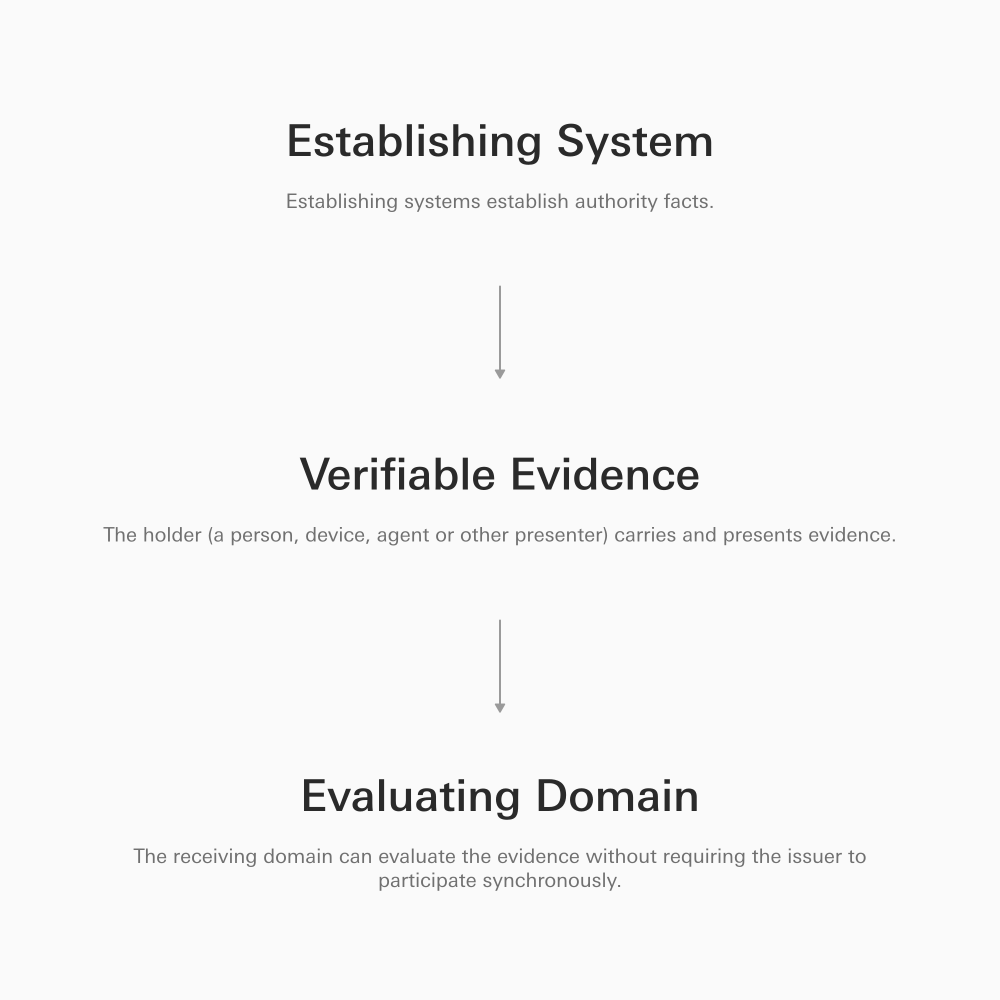
Evidence can allow the result of that establishment to be presented later by a holder (a person, device, agent or other presenter) to the domain responsible for the decision.
When the evidence is cryptographically verifiable and the receiving domain established the necessary trust in advance, the issuer does not have to participate in that verification.
The systems that established the authority do not have to participate synchronously when that later evaluation occurs. They keep important responsibilities for trust, lifecycle, state and issuance.
The separation changes the dependency at the moment of evaluation. It does not make those responsibilities disappear.
Established authority can be independently evaluated.
Here, independently does not mean dependency-free. It means that evaluation does not require synchronous participation by the authority or systems that established it. Previously established trust, relevant evidence, available lifecycle state, local infrastructure and the requirements governing the decision can all remain necessary.
Verification is not the decision.
Verification can establish that evidence, signatures, trust relationships or relevant state satisfy their technical requirements.
Krutho verifies the holder by proof-of-possession. The holder shows that it controls the private key bound to the credential, usually by signing a fresh challenge. A copied credential or a shared secret does not pass. Proof-of-possession is authentication: it establishes that the presenter is the party the credential was issued to. Authorization is the separate decision about what that party may do.
Evaluation asks a different question:
Is what has been established enough for this decision, here, now?

Evidence
What has been established?

Trust
What can the receiving domain rely on?

State
What is known about its current validity?

Requirements
What does this decision require?
Different decisions can legitimately require different evidence, different assurance, different freshness or different dependencies. The same evidence can therefore be sufficient for one decision and insufficient for another.
What can be decided depends on what can be known.
Evidence and authority are not timeless.
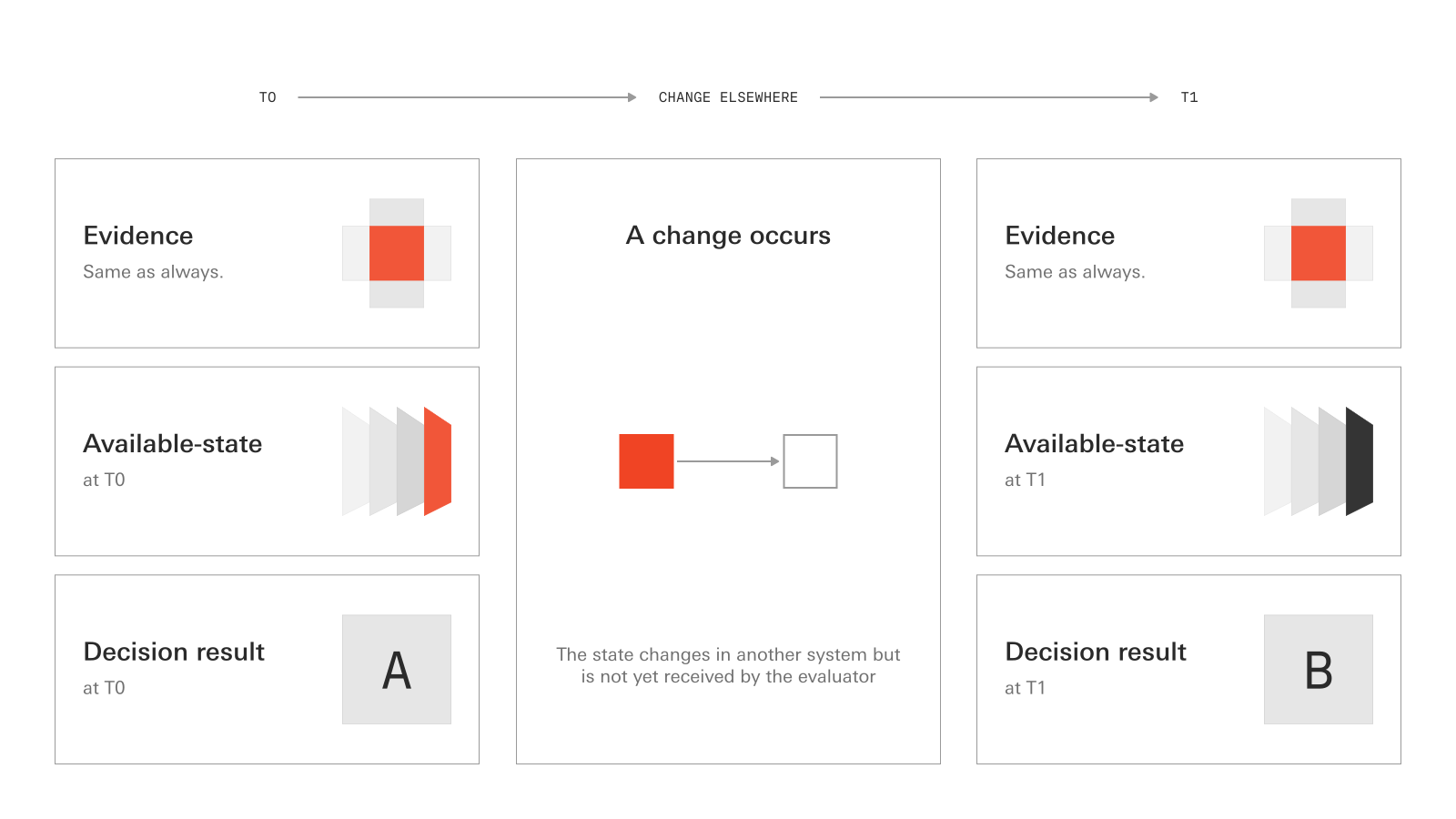
They can expire. Relevant authority can be withdrawn. Facts can change. Lifecycle state can age. An evaluator cannot act on a change it has not received.
A deployment therefore has to determine what state must be available, how current it needs to be, and what happens when sufficient knowledge is unavailable.
That can mean a later evaluation produces a different result from an earlier one even when the presented evidence has not changed.
What is enough to make this decision here, now?
Decision is not enforcement.
Evaluation determines whether the available evidence, trust, state and requirements support a particular result.
The resulting decision still has to be made effective by the relevant system.
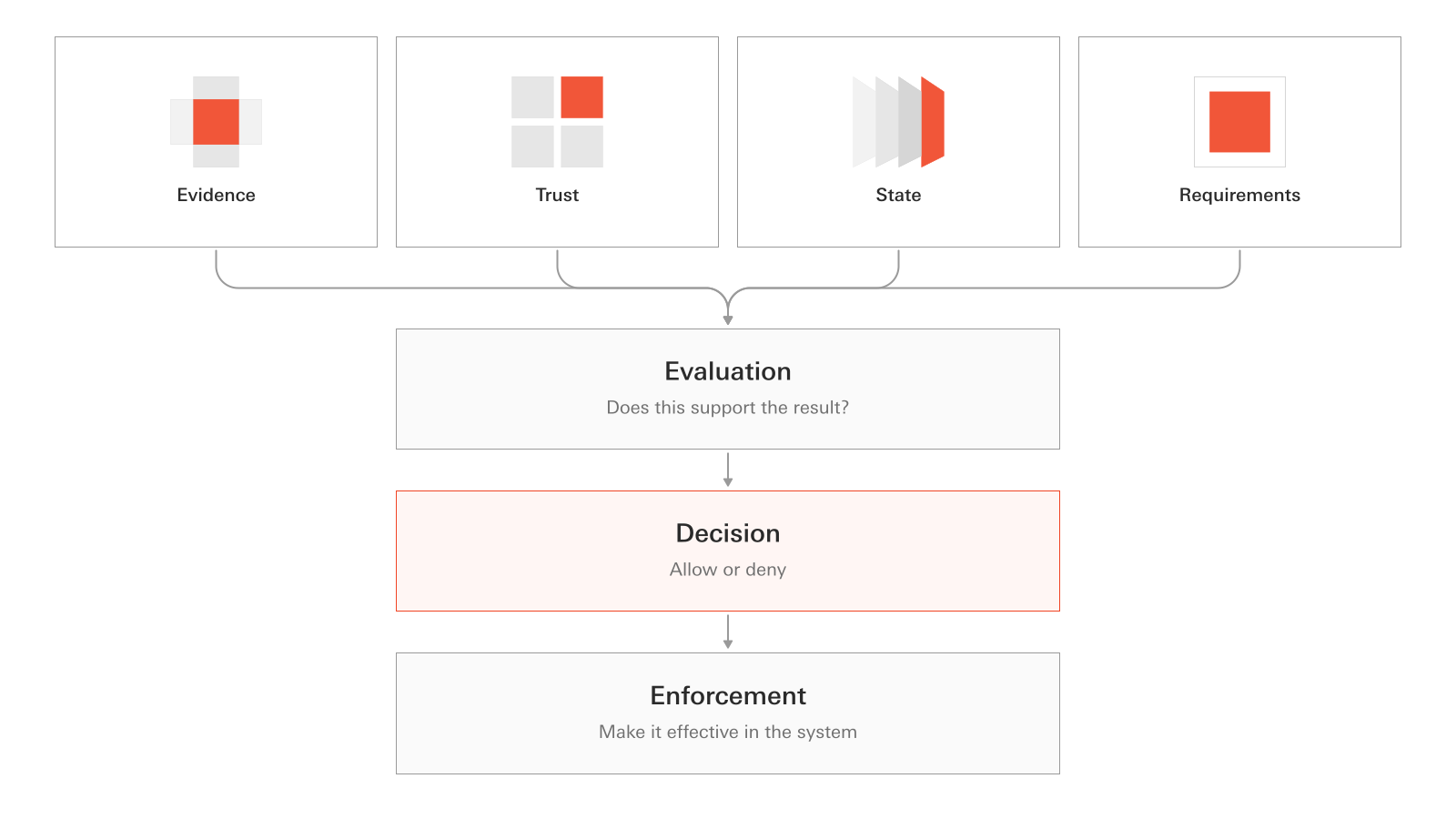
- A network may admit or disconnect a device
- An application may allow or deny an action
- A resource system may permit or refuse access
How and when that happens belongs to enforcement.
This distinction matters particularly when state changes after a session or action has already begun. A change can affect a later evaluation without implying that every existing session is terminated immediately.
Some decisions should remain synchronously dependent.
Separating establishment from evaluation is not a goal in itself.
A decision may require live information. It may consume shared mutable state. It may involve authority that can only safely be exercised once. It may require knowledge whose freshness cannot responsibly be satisfied by the state available to the evaluator. In those cases, synchronization may be part of what the decision legitimately requires.
Krutho does not prescribe one direction for every decision. It makes the dependency visible enough to ask whether it is actually required.
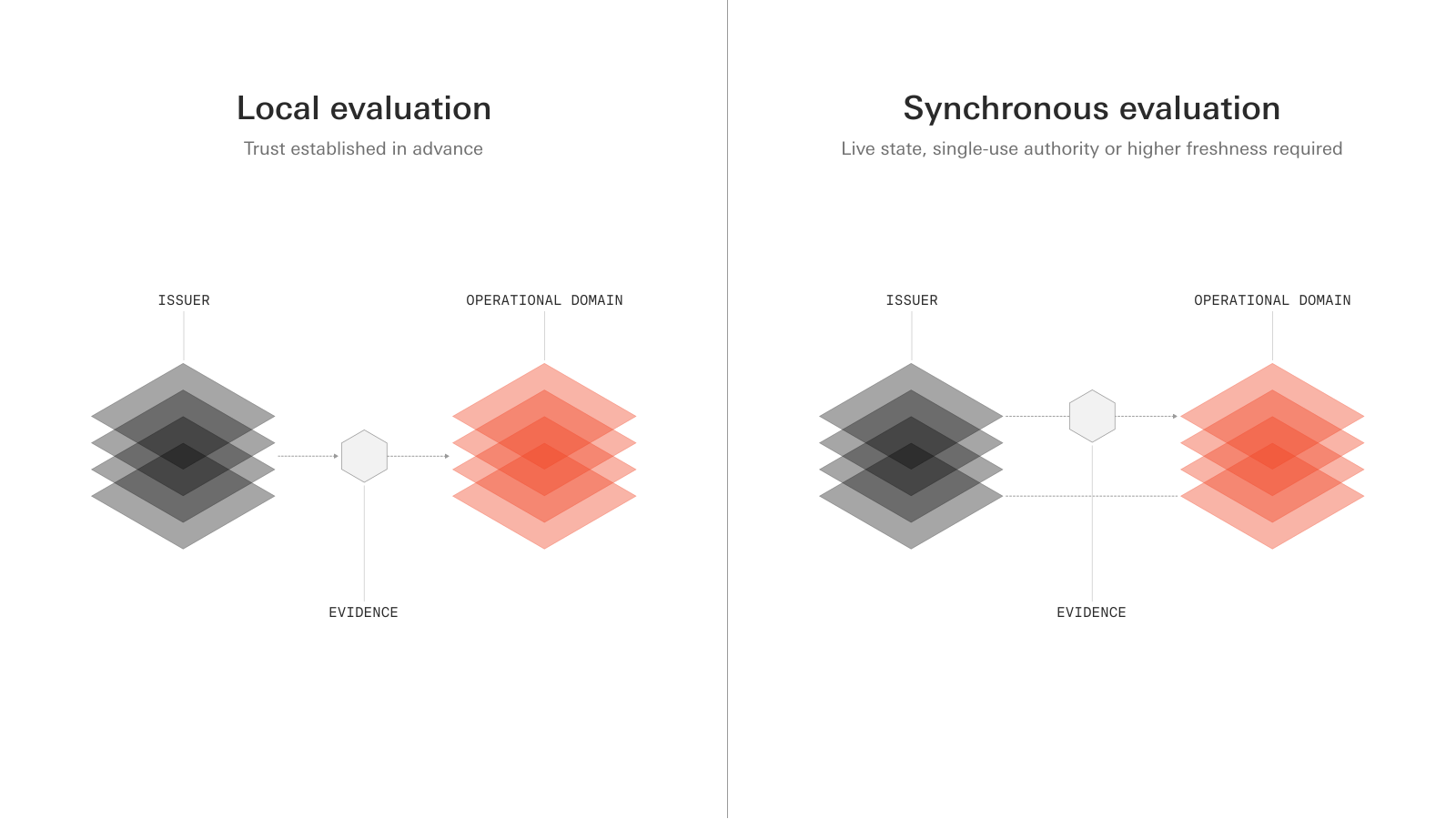
Different questions expose different parts of the same architecture.
Krutho can become relevant for different reasons. Those reasons do not require different versions of Krutho.
Operations
For operations, the separation can be between organizational dependence and legitimate decision autonomy. An operation can remain part of the organization while making selected decisions that already belong there.
Experience
For experience, the separation can be between relationship continuity and permission continuity. Crossing a system boundary does not necessarily require established context to be reconstructed, but the receiving domain still evaluates what that context is sufficient for.
Security and control
For security and control, the separation can be between governance and continuous participation. Authority can remain bounded by trust, lifecycle, scope and time without every system involved in establishing it participating synchronously in every relevant evaluation.
Architecture
For architecture, the separation can be between establishment and evaluation. Systems can retain important responsibilities without necessarily remaining in the synchronous decision path.
Delegation and agents
For delegation and agents, the separation can be between authority and identity. Something can act under delegated authority without becoming the accountable human or organization.
Organizational boundaries
Across organizational boundaries, the separation can be between authority origin and decision responsibility. One organization can establish something another relies on without making the decision for it.
These are different consequences of the same architectural model.
Krutho changes the relationship between authority and decision.
Krutho is building authorization infrastructure that issues or carries decision-relevant evidence, authenticates the holder by proof-of-possession, verifies the evidence against established trust, and supports bounded authorization decisions. It is also building the mechanisms that bring lifecycle state to the evaluator.
Krutho does not replace every system around the decision. The deployment determines who establishes authority or facts, who operates issuance, what the receiving domain trusts, what evidence it requires, how current state must be, and how the resulting decision is enforced. Krutho provides mechanisms through which established authority can remain evaluable within that arrangement.
The architectural change is more fundamental than the location of a particular component. The receiving system evaluates established authority where it makes the decision.
The systems involved in establishing what that decision relies on do not always need to participate when the decision is made. The receiving domain does not gain unlimited authority as a result. It gains enough capability to make the decisions that legitimately belong there, under the conditions governing them.