Applications / Connected Aircraft
Which decisions actually need the ground to participate when they are made?
An aircraft remains part of a wider airline, yet some decisions made onboard can be evaluated there. Take admission to the aircraft network.
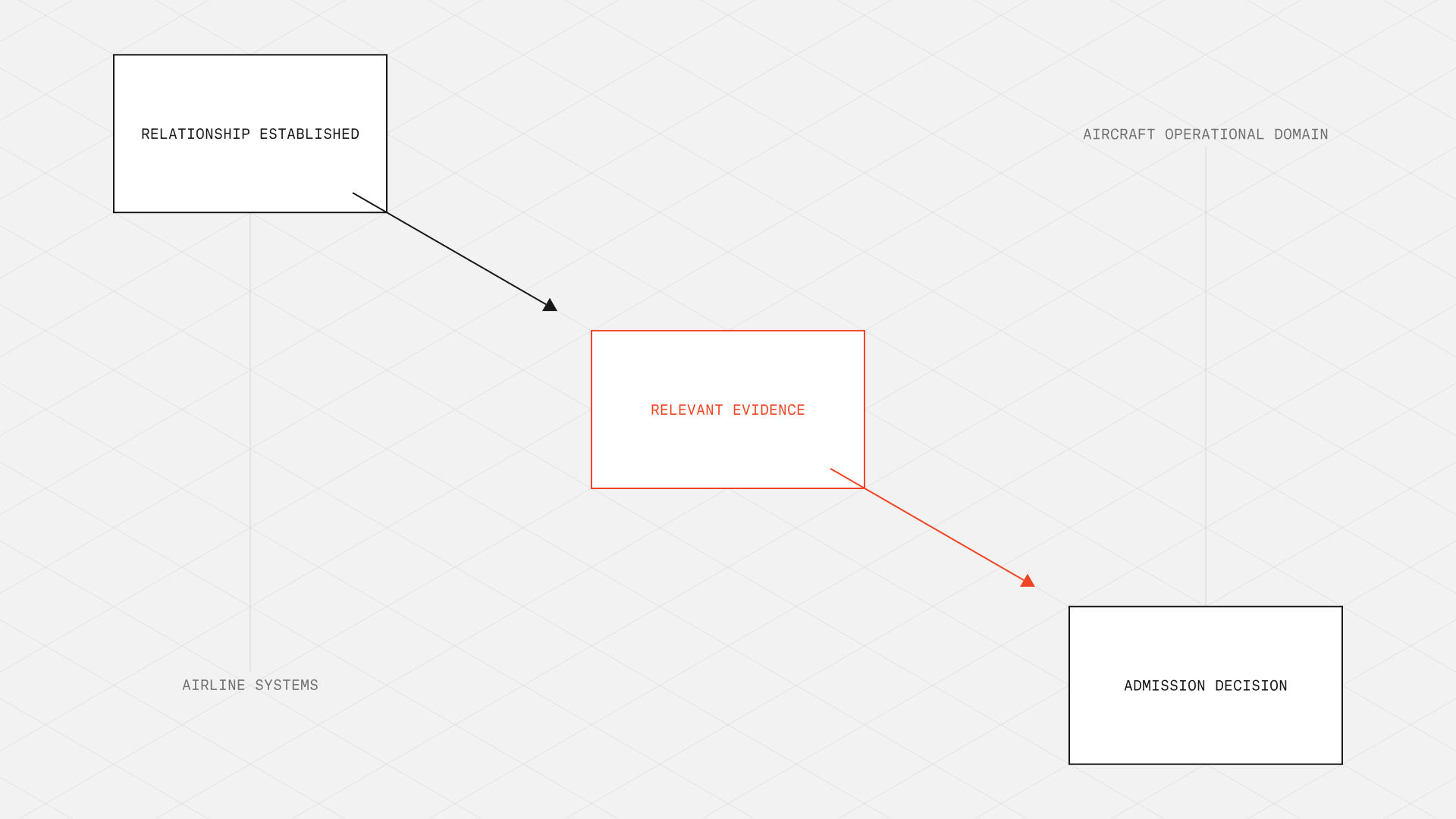
The relationship with the passenger, relevant facts and the basis on which network access may be permitted can be established before the passenger reaches the aircraft. If the onboard network must return to those establishing systems whenever it decides whether to admit the passenger's device, connectivity becomes more than a communications service. It becomes part of the authorization path.
The admission decision is concrete:
The decision
May this device join this network?
Krutho's architecture is designed so the aircraft's operational domain evaluates relevant evidence against the trust, available state and requirements governing that admission decision. It does not make every onboard decision independent of the ground.
Each decision depends on the systems it requires.
Connectivity is not the decision.
Aircraft connectivity can be available, intermittent, constrained or changing. For passenger network admission, the useful question is not whether the aircraft can reach the ground. It is whether the systems on the ground need to participate synchronously when the onboard network evaluates the passenger's evidence.
Those systems keep important responsibilities. They establish relevant facts or authority, take part in trust and lifecycle relationships, and make updated state available. They do not need to participate at the moment of every evaluation.
Connectivity availability does not have to mean connectivity dependency.
Network admission can be an onboard decision.
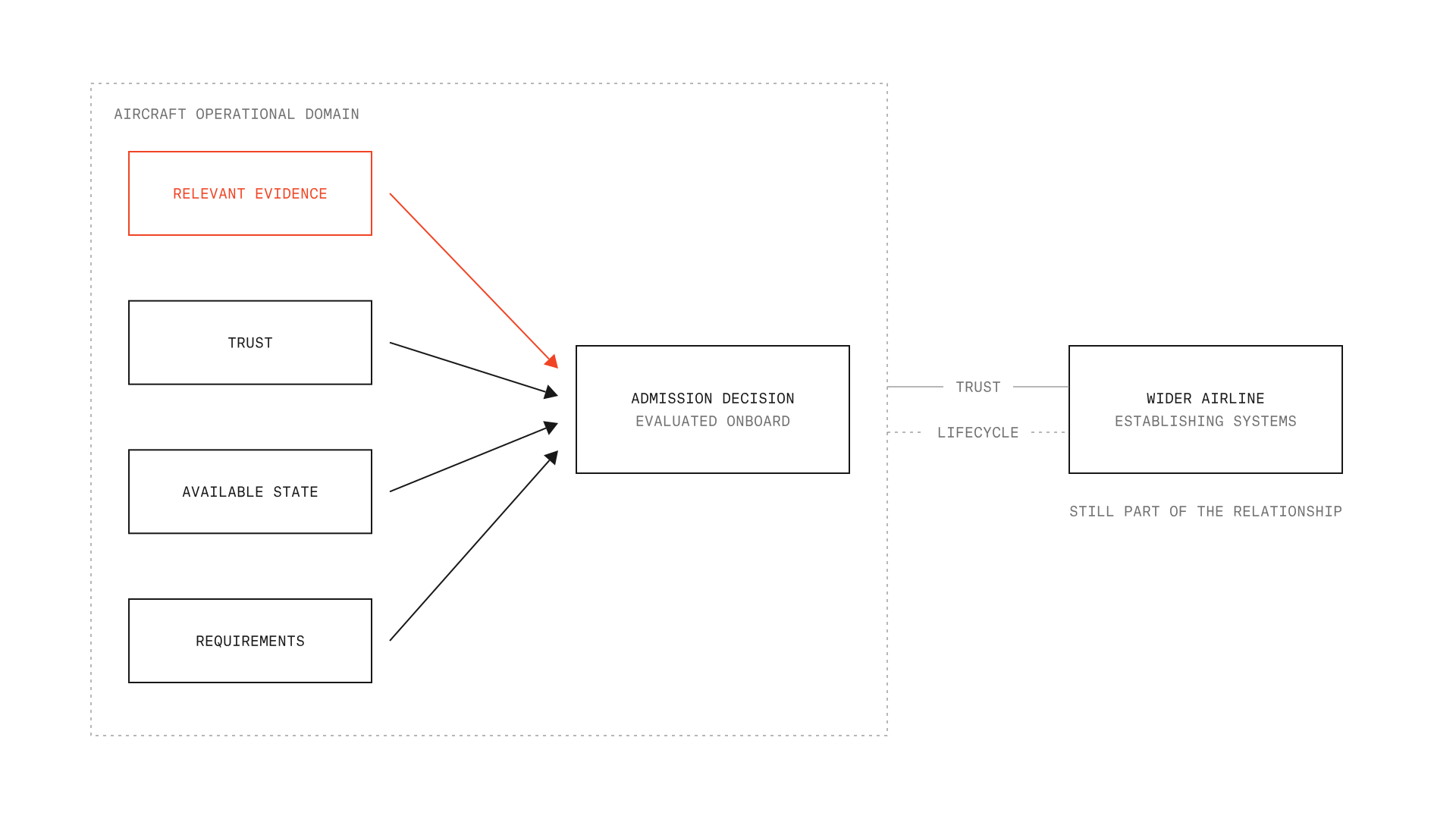
The aircraft does not gain authority because it can evaluate evidence locally. Responsibility for deciding whether a device may join the onboard network already sits with the systems responsible for that network, under the conditions governing that decision.
Relevant authority or facts can be established elsewhere and expressed through evidence that the onboard domain can evaluate. The decision still depends on the evidence it receives, the trust it accepts, the state available to it and the requirements governing network admission. The aircraft remains part of the wider airline and dependent on the relationships that make the evaluation legitimate.
Autonomy without independence.
The passenger crosses an infrastructure boundary. The relationship does not have to start again.
Moving from an airline's digital services to its aircraft network crosses a real infrastructure boundary. That does not mean the passenger must rebuild context already established.
Relevant evidence keeps that context meaningful when the onboard network decides whether to admit the passenger. The network still evaluates what the evidence is sufficient for under the conditions governing that decision. The passenger meets less of the infrastructure transition.
That does not mean permission persists from one system to another. Network admission remains a new decision, and renewed interaction or assurance can still be required when its requirements demand it.
The boundary remains. The relationship doesn't reset.
What the aircraft knows determines what it can responsibly decide.
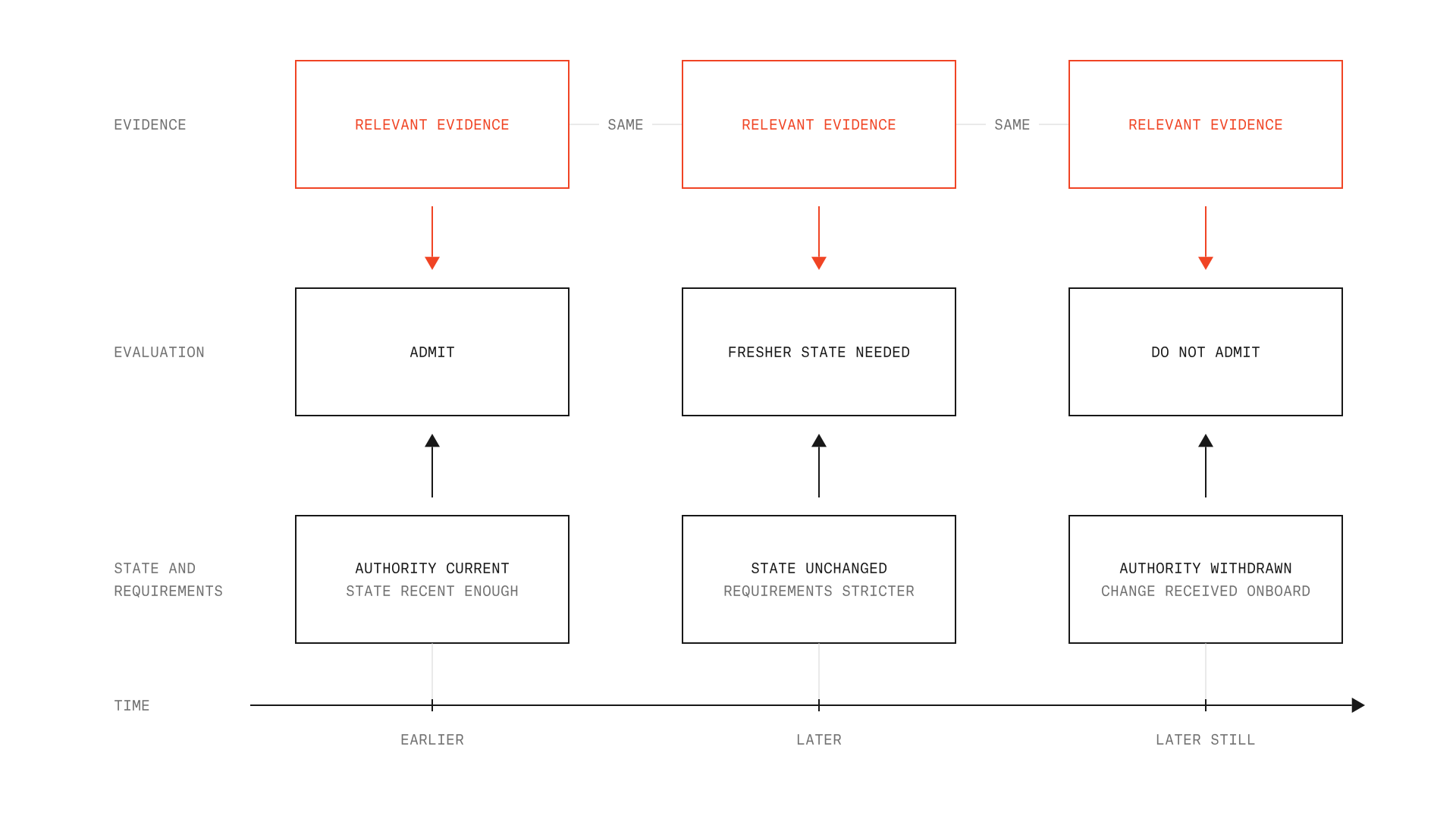
Suppose the evidence presented for network admission was acceptable when it was established. That does not make it timeless. The evidence can expire, relevant authority can be withdrawn, facts can change, and state available onboard can become too old for the requirements governing admission.
An onboard evaluator cannot know about a change it has not received. The deployment therefore has to define how current available state must be for the admission decision and what should happen when sufficient knowledge is unavailable.
A later admission decision may have a different answer from an earlier one even when the passenger presents the same evidence.
What is enough to make this decision here, now?
A change on the ground can matter without the ground making the decision.
If relevant authority is withdrawn, the aircraft does not know merely because the change happened elsewhere. The relevant state first has to become available to the onboard evaluation path.
Once it is available, a subsequent evaluation can take that change into account. What happens to an existing network session then depends on when reevaluation occurs and how the network enforces the resulting decision.
Local evaluation therefore does not sever the lifecycle relationship with the wider airline. It changes whether those systems need to participate synchronously in the evaluation itself.
Not every onboard decision should have the same architecture.
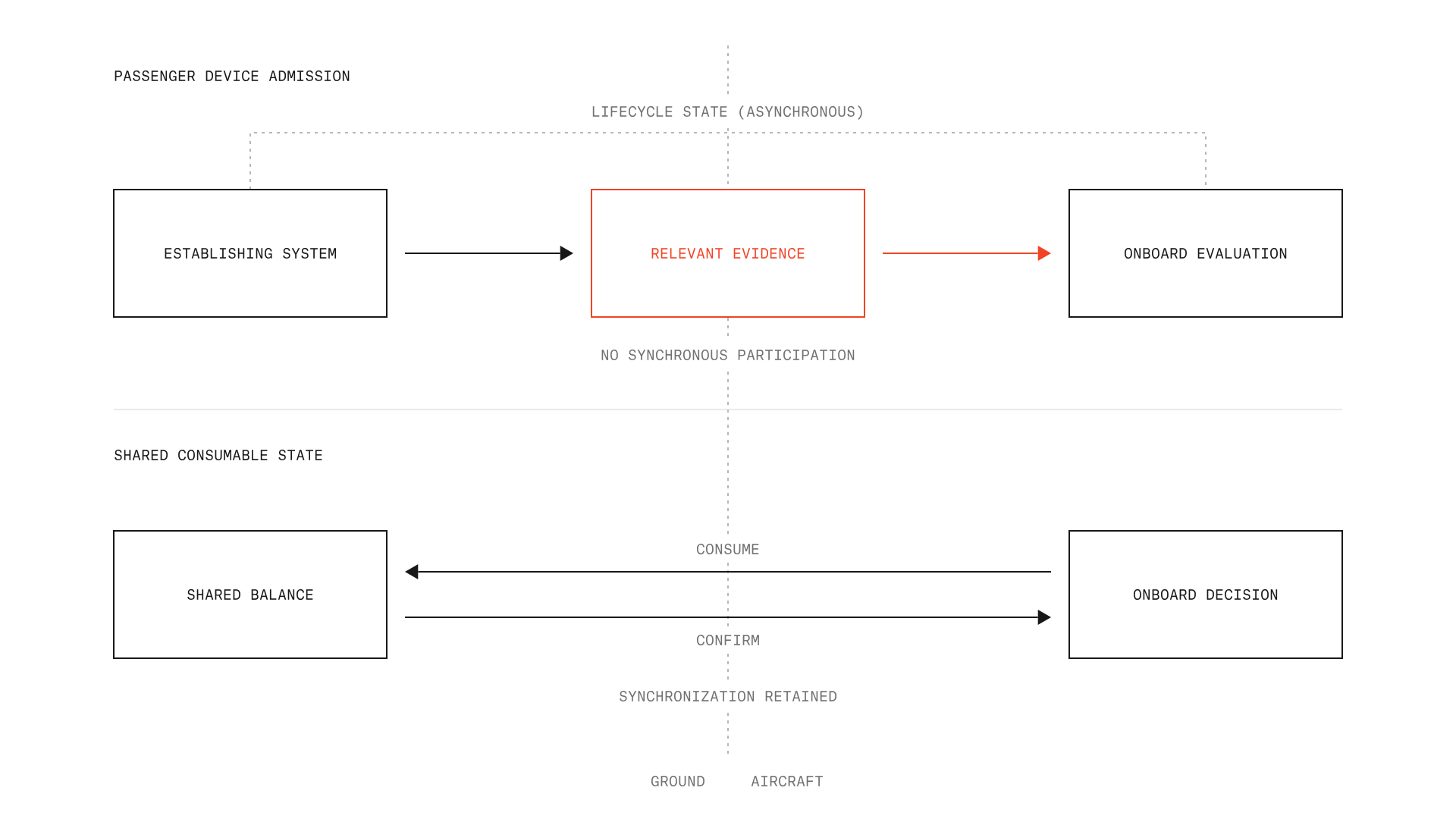
Network admission illustrates a decision that can, under appropriate conditions, be evaluated against evidence, trust and state available onboard. Other decisions can have different requirements.
If exercising authority consumes shared mutable state, such as a one-use entitlement or value from a common balance, the decision needs synchronization or shared state so the same authority is not consumed twice. A decision that needs current information can stay synchronously dependent for the same reason.
The point is not to move authorization onto the aircraft. It is to determine which dependencies each decision requires.
The architectural change is larger than disconnected operation.
The value of separating establishment from evaluation becomes obvious when connectivity is constrained, but the separation can still matter when connectivity is working normally.
For network admission, removing unnecessary synchronous participation can change where latency enters the authorization path and which systems must remain available when the decision is made. It can also allow the passenger's established relationship to cross the infrastructure boundary without requiring that relationship to be reconstructed solely because the underlying system changed.
Disconnection is therefore one condition that exposes the dependency. It is not the definition of the application.
Why does the ground need to participate when this decision is made?
Evidence
What we have shown.
KruthoAir is a controlled bench demonstration, in an aircraft-style environment, of network admission and of a later reevaluation after we changed lifecycle state at the verifier. It supports specific parts of the architecture described here, not the complete Connected Aircraft application.
An aircraft remains part of the airline.
Selected decisions can be evaluated onboard without the ground participating synchronously when the evidence, trust, available state and requirements governing those decisions make that responsible. Other onboard decisions still require synchronous participation when their requirements demand it.
Some decisions belong onboard. Authority stays with the airline.